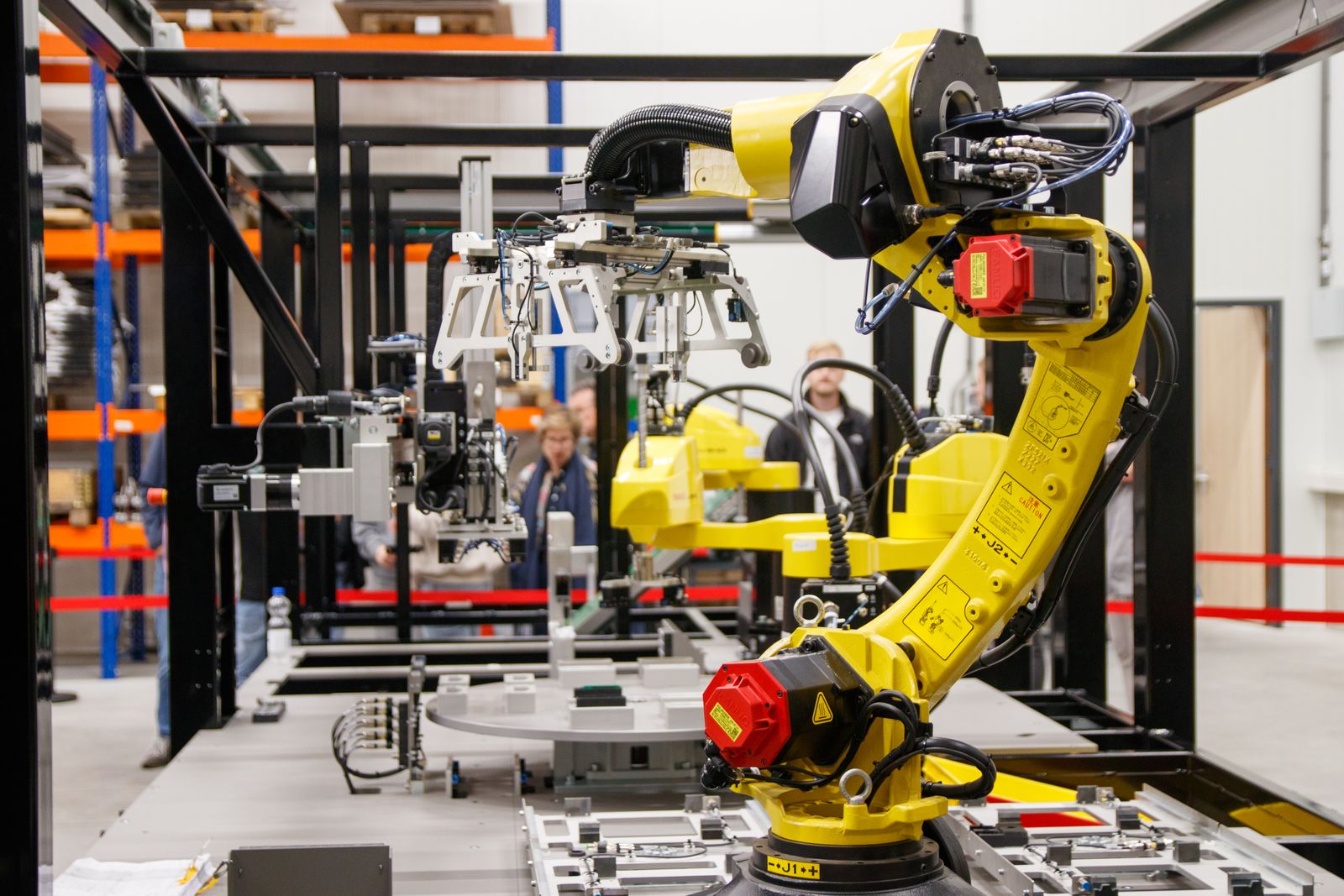
Define meaningful sovereignty
Sovereign manufacturing does not require that every component be produced domestically. The objective is to retain meaningful control over critical design decisions, operational data, maintenance, intellectual property and the ability to replace dependencies. A system assembled locally may remain exposed to foreign firmware, cloud services or irreplaceable components.
The starting point is a dependency map: actuators, sensors, control electronics, compute modules, batteries, firmware, software licenses, tooling and suppliers. Identify single-source components and assess lead times, technical interfaces, repairability and contractual restrictions.
Move from integration to production
A practical development path can begin with integration and application engineering, then proceed to local assembly and test, component redesign and qualified production where economics justify it. Each stage should establish a repeatable bill of materials, engineering change control, assembly instructions and acceptance procedures.
Canadian firms may build differentiated value through motion software, machine vision, custom end effectors, quality systems and maintenance services. A local facility is only useful if it has a reliable pipeline of qualified technicians, realistic utilization and the documentation needed to deliver consistent output.
Assurance, data and lifecycle economics
Track hardware serial numbers, firmware versions, calibration records and test evidence. Define ownership of production data, remote service credentials and design files. Evaluate contractual access to updates, repair documentation and replacement parts. A sovereignty strategy should consider cybersecurity, supplier continuity and service obligations together.
A manufacturing business case includes tooling, test equipment, inventory, engineering changes, warranty reserves, facilities, training and working capital. Compare landed cost and lifecycle risk across outsourcing, partnership assembly and domestic manufacture. Avoid treating a projected production volume as a committed order.
A staged Canadian roadmap
An initial feasibility programme can shortlist components and partners, build a limited engineering prototype and establish test protocols. A second stage can qualify assembly and service processes, followed by a controlled pilot with a customer or research partner. Production investment should follow validated demand and readiness, not precede them.
For industrial robot integration, consult ISO 10218-2:2025 and qualified engineering professionals. Manufacturing capability is established through evidence, quality and lifecycle support rather than geography alone.