Skip to content
PHYSICAL AI / ADVANCED ROBOTICSCANADA · GLOBAL PERSPECTIVE
CANADA ROBOTICS GROUP™

CANADA ROBOTICS GROUP™ / PHYSICAL AI

Physical AI

The convergence of artificial intelligence and physical robotics.

Explore our perspective →
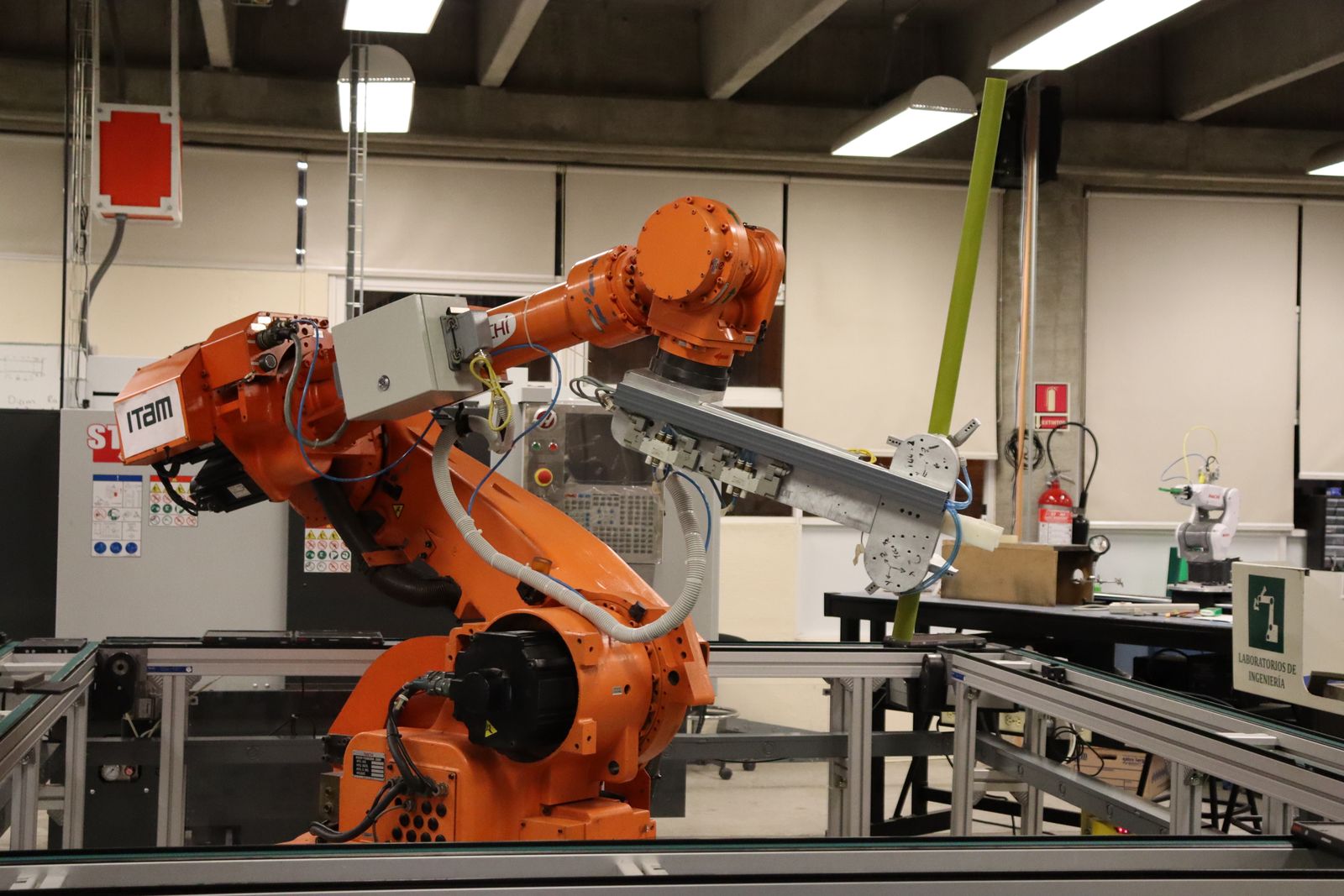
Robotic arm in an engineering laboratory
CRG / ILLUSTRATIVE TECHNOLOGY

05 / EMBODIED INTELLIGENCE

From understanding to action.

Physical AI combines perception, world understanding and decision systems with mechanical design and real-time control. The result is intelligence that interacts with physical environments.

01 / FOCUS AREA

Perception and context

Vision, sensing, localization and environmental state estimation.

02 / FOCUS AREA

Learning and reasoning

Task planning, vision-language-action models, simulation and evaluation.

03 / FOCUS AREA

Bounded execution

Validated motion controllers, safety interlocks and human override.

The convergence of AI and robotics

Generative and multimodal AI can help machines interpret instructions, recognize objects and plan tasks. Robotics turns these capabilities into physical actions through sensors, actuators and control systems. Language models alone are not a safety controller.

A layered architecture

Perception estimates state; task policies propose actions; motion planning and real-time controls execute within verified boundaries. Independent safety mechanisms must remain effective when AI components fail.

Learning from the physical world

Simulation, demonstrations and appropriately governed operational data can support training and evaluation. Test for distribution shifts, uncertainty and unexpected interactions before production deployment.

Sovereign data and compute

Consider where robot data is stored, how models are updated, who controls access and how edge inference handles latency and connectivity. Maintain logs, version control and rollback paths.

CANADA ROBOTICS GROUP™

Build the next generation.

Explore advisory, technology and industrial collaboration.

Connect with us →